Things We Would Not Have Without Ancient Greece
The ancient civilization of Greece has left an indelible mark on human history, influencing various aspects of modern society. From philosophy and mathematics to art and architecture, the contribution...
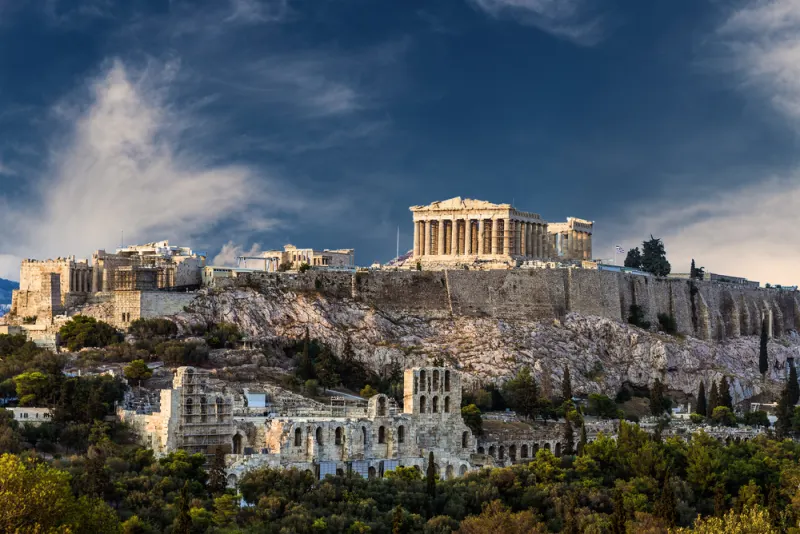
The ancient civilization of Greece has left an indelible mark on human history, influencing various aspects of modern society. From philosophy and mathematics to art and architecture, the contributions of ancient Greece have shaped the world we live in today. Today, we’ll discuss five essential things we would not have without the ingenuity and advancements of ancient Greece.
1. Democracy
One of the most significant contributions of ancient Greece is the establishment of democracy, a system of government in which power resides with the people. In the city-state of Athens, during the 5th century BCE, a form of direct democracy emerged, allowing citizens to participate in decision-making through an assembly called the "Ekklesia." This Athenian democracy was the first of its kind, offering a radical departure from the autocratic systems prevalent in other civilizations at the time. The principles of ancient Greek democracy, such as the right to vote, freedom of speech, and the rule of law, have profoundly influenced the development of democratic institutions worldwide.
2. Philosophy
The ancient Greeks made substantial contributions to the field of philosophy, fundamentally shaping the way we approach knowledge, ethics, and understanding of the world. The works of renowned philosophers such as Socrates, Plato, and Aristotle have had a lasting impact on Western thought and continue to influence philosophy and critical thinking today. Socrates' Socratic method of questioning and self-examination laid the groundwork for the exploration of truth and self-awareness. Plato's ideas on the theory of forms and his concept of ideal governance have significantly impacted political thought throughout history. Aristotle's profound insights into ethics, logic, and natural sciences have left a profound and enduring mark on various academic disciplines. Ancient Greek philosophy paved the way for intellectual inquiry, providing the basis for the development of modern philosophy and its influence on various aspects of human life.
3. The Olympic Games
The ancient Olympic Games, held in Olympia, Greece, every four years, were a celebration of athleticism and competitive spirit. These games, dating back to 776 BCE, were not only a testament to physical prowess but also served as a unifying force, bringing together athletes and spectators from different city-states across Greece. The legacy of the ancient Olympic Games continues to resonate in the modern world, with the establishment of the modern Olympic Games in 1896. The Olympic Games, held every four years, now transcend borders, promoting global cooperation, sportsmanship, and unity among nations. The Olympic motto, "Citius, Altius, Fortius" (Faster, Higher, Stronger), reflects the enduring spirit of competition and pursuit of excellence that can be traced back to the ancient Greeks.
4. Theater and Drama
Ancient Greece's contribution to theater and drama has significantly influenced the performing arts throughout history. The ancient Greeks staged theatrical performances as part of religious festivals, using them as a means of storytelling, entertainment, and cultural expression. Theater was deeply ingrained in Greek society, and its dramatic traditions paved the way for the development of theatrical conventions such as tragedy and comedy. Playwrights like Aeschylus, Sophocles, and Euripides introduced the concept of a three-actor play and incorporated themes of human struggle, fate, and morality. The use of a chorus added an essential element of commentary and reflection. The influence of Greek theater can be seen in the works of renowned playwrights like William Shakespeare and remains evident in contemporary theater productions worldwide.
5. Architecture
Ancient Greece's architectural innovations have had a profound impact on the evolution of architecture and urban planning. The ancient Greeks developed three distinctive architectural orders - Doric, Ionic, and Corinthian - each with its unique features and proportions. These architectural styles found their expression in the construction of temples, theaters, and other monumental structures, showcasing the ancient Greeks' understanding of aesthetics and engineering. The Parthenon, a masterpiece of Doric architecture, stands as an enduring symbol of ancient Greece's architectural prowess. Its innovative design and use of mathematical principles, such as the Golden Ratio, have inspired architects and designers for millennia. The concept of the column and entablature has become a hallmark of Western architecture, influencing the design of numerous buildings, monuments, and public spaces worldwide.