Recent Archaeological Discoveries That Shocked the World
Get ready to embark on a journey through time as we delve into the realm of recent archaeological discoveries that rocked the world. From lost cities to ancient artifacts, the past has a way of reveal...
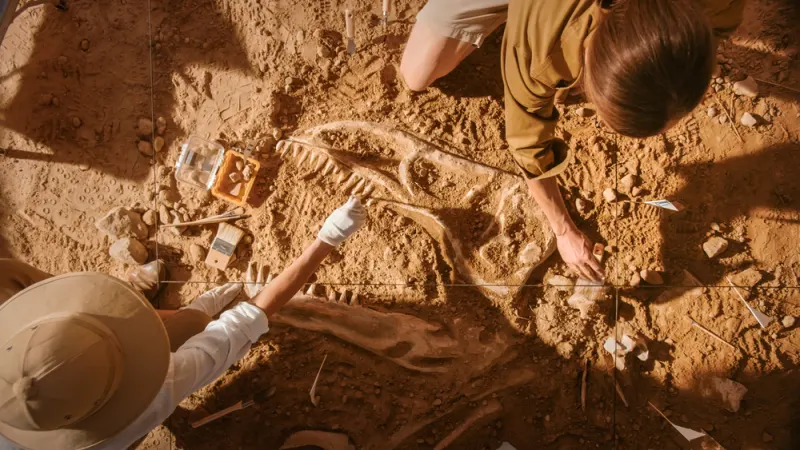
Get ready to embark on a journey through time as we delve into the realm of recent archaeological discoveries that rocked the world. From lost cities to ancient artifacts, the past has a way of revealing its secrets in the most astonishing ways. So, buckle up as we explore five mind-blowing archaeological finds that had jaws dropping and history books rewriting themselves.
1. The Lost City of Luxor: A Buried Marvel Unveiled
Imagine the moment when archaeologists stumbled upon what seemed like a mirage—a sprawling ancient city hidden beneath the sands of Luxor, Egypt. In 2021, this real-life Indiana Jones story became a reality as researchers unveiled an incredibly well-preserved city dating back over 3,000 years. Dubbed the "Rise of Aten," the city was built by King Amenhotep III and continued to flourish under his successor, King Tutankhamun's grandfather. The discovery offered an unprecedented glimpse into daily life during the height of the Egyptian empire. The city featured residential and industrial areas, streets, and even a bakery with ovens and storage pots. The richness of detail painted a vivid picture of bustling life in antiquity. The find proved that the sands of time have a way of preserving entire civilizations, waiting for modern explorers to unveil their tales.
2. The Terracotta Warrior Puzzle: More Than Meets the Eye
Fast forward to China, where the terracotta army of Emperor Qin Shi Huang has captured imaginations for decades. But in 2020, a new twist was added to the tale when researchers discovered that the life-sized statues had a lot more color than previously thought. These warriors, part of a massive tomb complex, were originally painted in vibrant hues that faded over time. This revelation shattered the conventional image of the warriors as monochrome figures, providing a fresh perspective on the artistry and craftsmanship of ancient China.
3. The Shipwrecks of the Fourni Islands: An Underwater Treasure Trove
Hold your breath, because we're diving beneath the waves to the Fourni Islands in Greece, where the ocean floor is a treasure trove of ancient shipwrecks. In recent years, marine archaeologists discovered an astonishing 58 shipwrecks dating from the 5th century BC to the 18th century AD. These wrecks, scattered across a small stretch of sea, paint a vivid picture of maritime history through the ages. The find not only revealed the sheer number of shipwrecks but also shed light on ancient trade routes and seafaring activities. These wrecks acted as time capsules, preserving artifacts, cargo, and even personal items of those who sailed the seas long ago.
4. The Cerne Abbas Giant: A Chalky Enigma
Leaving the depths of the sea, let's travel to the rolling hills of England, home to the famous Cerne Abbas Giant—a massive chalk figure carved into the hillside. For years, the origins and purpose of this enigmatic figure were shrouded in mystery. But in 2021, archaeological research combined with geophysical surveys and excavations offered new insights. The Cerne Abbas Giant, originally thought to be of prehistoric origin, was now believed to have been carved in the late 17th century. This revelation challenged assumptions about the age and significance of the figure, leaving experts scratching their heads and sparking fresh debates. The giant's true identity remained a puzzle, proving that even well-trodden paths of history can take unexpected turns.
5. The Temple of the Night Sun: An Ancient Maya Marvel
We're ending our journey in the lush jungles of Guatemala, where a stunning discovery shed light on the architectural prowess of the ancient Maya civilization. Researchers stumbled upon the "Temple of the Night Sun," a 2,000-year-old structure adorned with intricate carvings and hieroglyphics. The temple's name was inspired by the alignment of the carvings with the setting sun during the summer solstice. The find revealed the Maya's deep understanding of celestial events and their connection to religious practices. The temple served as a cosmic observatory, showcasing the intricate relationship between architecture, astronomy, and spirituality. This discovery rekindled our appreciation for the ancient world's mastery of both the tangible and intangible, a reminder that there's always more to learn from the echoes of the past.