Reasons Why Aliens Might Actually Be Real
The idea of extraterrestrial life has captured human imagination for centuries. From ancient myths and legends to modern-day science fiction, the concept of aliens has taken root in our collective con...
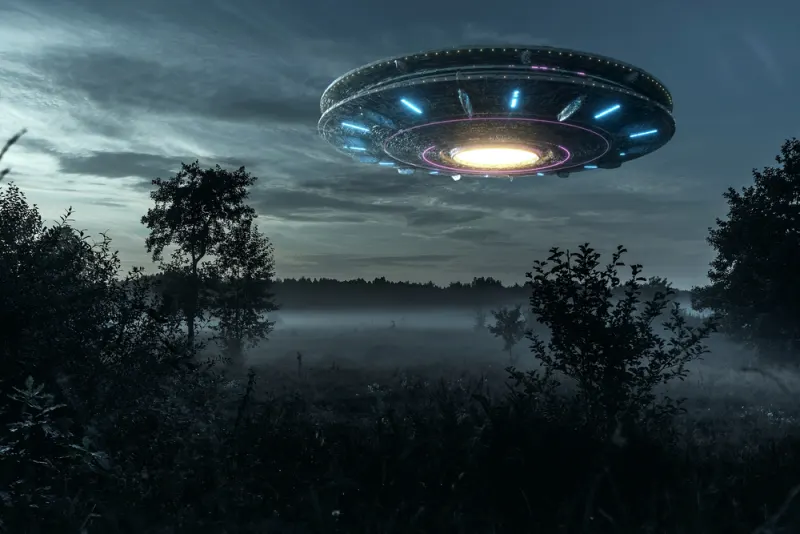
The idea of extraterrestrial life has captured human imagination for centuries. From ancient myths and legends to modern-day science fiction, the concept of aliens has taken root in our collective consciousness. But could there be more to this fascination than mere fantasy? While the existence of extraterrestrial beings remains a tantalizing mystery, there are a few intriguing reasons that might just tip the cosmic scales in favor of the idea that aliens might actually be real. So, grab your tinfoil hats and telescopes, because we're about to explore five reasons that could make you ponder the possibility of interstellar neighbors.
1. The Vastness of the Universe
Let's start with a reality check that's bound to blow your mind – the universe is unimaginably vast. Picture this: there are billions upon billions of stars in the Milky Way galaxy alone, and there are trillions of galaxies in the observable universe. That's a whole lot of cosmic real estate. With such an astronomical number of stars and planets out there, it's statistically plausible that some of them could host conditions conducive to life as we know it. Take Earth, for example – it's teeming with life in all its diverse forms, from the depths of the oceans to the highest mountain peaks. If a tiny planet in a seemingly ordinary solar system can give rise to such a dazzling array of life, then who's to say that similar processes aren't unfolding on other hospitable worlds?
2. Extremophiles on Earth
When it comes to survival, life on Earth is nothing short of resilient. From scorching deserts to frigid polar regions, life has managed to carve out niches in even the most extreme environments. Enter the fascinating world of extremophiles – organisms that thrive in conditions that were once thought to be inhospitable. We're talking about bacteria that call the scorching depths of hydrothermal vents home, or microbes that live happily within the acidic confines of volcanic craters. If life on Earth can adapt and flourish in such extreme conditions, it opens up the possibility that similar adaptations could occur elsewhere in the universe.
3. The Goldilocks Zone
When it comes to the search for extraterrestrial life, scientists have a golden rule – look for planets in the "Goldilocks zone." This whimsically named region refers to the habitable zone around a star, where conditions are just right for the existence of liquid water – a crucial ingredient for life as we know it. Think of it like this: too close to a star, and the planet's surface becomes a scorching desert. Too far away, and it's a frozen wasteland. But within the Goldilocks zone, temperatures are juuust right, creating the ideal conditions for liquid water to flow and the potential for life to flourish. With the discovery of thousands of exoplanets (planets outside our solar system) in recent years, scientists have identified numerous candidates that could potentially be in this habitable sweet spot. Planets like Proxima Centauri b and TRAPPIST-1e have garnered attention for their location within the Goldilocks zone of their respective stars. While the presence of liquid water doesn't guarantee the existence of extraterrestrial life, it certainly makes these planets prime real estate for the cosmic search for neighbors.
4. Unexplained Phenomena
From mysterious lights in the sky to encounters with unidentified flying objects (UFOs), there's a treasure trove of unexplained phenomena that continue to fuel speculation about the existence of extraterrestrial beings. While many UFO sightings can be attributed to natural or man-made phenomena, there remain a few cases that defy easy explanation. Take the 2004 incident involving the USS Nimitz and the now-famous Tic-Tac UFO – a flying object that exhibited flight capabilities beyond our current understanding of technology. While the origins of such phenomena are still subject to debate, they do remind us that there's much we don't yet know about the universe and the potential for intelligent life beyond Earth.
5. The Search for Extraterrestrial Intelligence
For decades, scientists have been actively listening for signals from the stars, hoping to catch a cosmic conversation with extraterrestrial intelligence. This quest, known as the Search for Extraterrestrial Intelligence (SETI), involves scanning the cosmos for any potential signals or transmissions that might indicate the presence of intelligent beings. While we've yet to receive a definitive "hello" from our cosmic neighbors, the fact that we're actively engaged in this search speaks volumes about the plausibility of extraterrestrial life. With the advancement of technology and the continued exploration of distant planets, our ability to detect potential signals is becoming increasingly sophisticated. And even if we haven't received a cosmic call just yet, the very act of searching for extraterrestrial intelligence underscores the belief that the universe is a vast and potentially populated expanse waiting to be explored.