Five Things You Didn't Know About the Oval Office
The Oval Office is one of the most iconic and historically significant rooms in the United States. It has served as the primary workspace for presidents and witnessed numerous pivotal moments in Ameri...
The Oval Office is one of the most iconic and historically significant rooms in the United States. It has served as the primary workspace for presidents and witnessed numerous pivotal moments in American history. While the Oval Office is a well-known symbol of presidential power, there are several intriguing facts about this revered space that many people may not be aware of. Here are five of them:
1. The Shape and Design
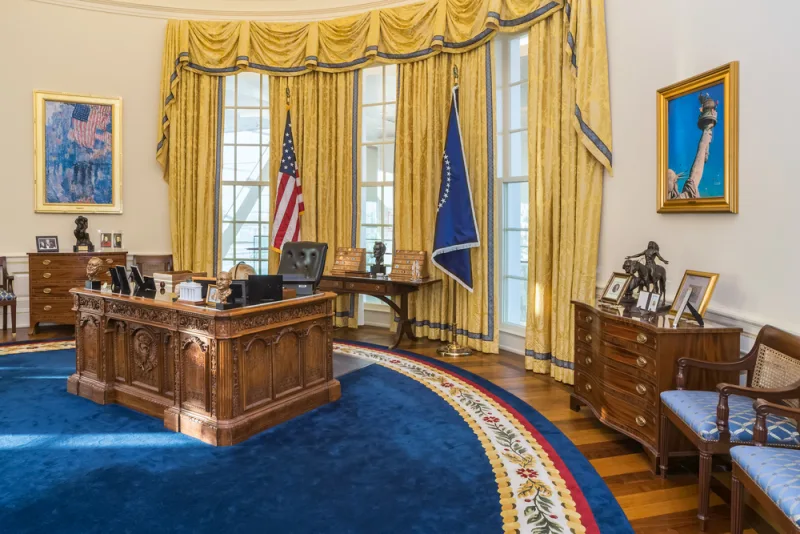
Contrary to its name, the Oval Office is not perfectly oval. The room's shape is actually more akin to a "squashed" oval or a "racetrack" shape. This design was chosen to provide a more efficient layout for the president's workspace. Its dimensions are approximately 35 feet long and 29 feet wide, with a height of 18 feet. The Oval Office's interior design is carefully curated by each president, reflecting their personal tastes and preferences. The office typically features a central Resolute Desk, which has been used by many presidents since it was gifted to President Rutherford B. Hayes by Queen Victoria in 1880. The room also showcases various historical artifacts, artwork, and busts of former presidents, contributing to its rich historical ambiance.
2. The Location
The Oval Office is located in the West Wing of the White House. However, its current position is not where it was originally built. In 1909, President William Howard Taft expanded the West Wing, and it was relocated to its present position to accommodate the growing demands of the presidency. Prior to this, it was situated in what is now known as the "Oval Office Study." Another interesting fact is that the Oval Office is situated directly above the White House Situation Room, a secure facility used for crisis management and communication during national emergencies. This proximity allows the president quick access to vital information and facilitates efficient decision-making during critical situations.
3. The Desk
The Resolute Desk, which occupies the center of the Oval Office, has a fascinating history. It is made from the timbers of the HMS Resolute, a British Arctic exploration ship that was abandoned and later recovered by an American vessel. In 1880, the ship's timbers were repurposed to create the Resolute Desk as a gesture of goodwill between the United States and the United Kingdom. The Resolute Desk has been used by several presidents, including John F. Kennedy, Ronald Reagan, and Barack Obama. It is renowned for its distinguished appearance and historical significance. Many presidents have been photographed behind the Resolute Desk, using it as a symbol of executive authority.
4. Secret Hidden Panels
The Oval Office is not without its secrets. Behind the elegant paneling and ornate décor, there are hidden panels that serve practical purposes. These panels can conceal a wide array of features, including hidden doors and compartments. Some of these hidden spaces are used to store equipment for audiovisual presentations, while others provide access to private restrooms and storage areas. Additionally, the room features a secret doorway known as the "President's Secret Passage." This discreet passage connects the Oval Office directly to the president's private residence, providing a convenient and secure route for the president to move between the two spaces without being observed.
5. Changes With Each President
While the Oval Office maintains a sense of continuity and tradition, each president has the opportunity to personalize the space to suit their taste and style. From the selection of artwork and furniture to the addition of personal mementos and family photographs, presidents often make the Oval Office their own during their tenure. For example, President Joe Biden has adorned his with busts and portraits of notable figures such as Martin Luther King Jr. and Robert F. Kennedy, highlighting his commitment to civil rights and social justice. This customization allows presidents to create an environment that reflects their values and priorities while honoring the historical significance of the office.