Creepy Ant Behaviors
Ants might seem like the tiny, harmless critters we casually flick away from our picnic baskets, but trust me, there's a whole world of bizarre and creepy behaviors happening right under our noses. Fr...
Ants might seem like the tiny, harmless critters we casually flick away from our picnic baskets, but trust me, there's a whole world of bizarre and creepy behaviors happening right under our noses. From mind control to zombie ants, these insects are masters of the eerie and the unexpected. So, grab your magnifying glass and get ready to delve into the spine-chilling world of ant behaviors that will make your skin crawl!
1. Zombie Ants and Mind-Control Fungi
Imagine this: an ant mindlessly climbing to the top of a plant, compelled by some unseen force. Well, this isn't a scene from a horror movie; it's a real-life phenomenon caused by mind-controlling fungi. These fungi, belonging to the genus Ophiocordyceps, infect ants and hijack their nervous systems, making them climb to a higher point before bursting out of their bodies to spread spores. It's like an insect version of "Invasion of the Body Snatchers," with fungi playing the role of the creepy invaders. Some parasitic wasps even lay their eggs on ants. When the wasp larvae hatch, they release chemicals that manipulate the ant's behavior, turning it into a living nursery for the wasp pupae. The ant will even stand guard to protect the developing wasps from predators. It's a spine-chilling example of how nature can be both fascinating and utterly disturbing at the same time.
2. Alien Abduction? Try Ant Abduction by Other Ants
We've all heard stories of alien abductions, but how about ant abductions by other ants? Certain ant species, like the infamous Amazonian "raiding" ants, engage in a behavior called "doryline parasitism." These raiding ants are like the marauders of the ant world, sweeping into other ant colonies, abducting the pupae, and bringing them back to their own nest. Once the abducted pupae hatch into workers, they're assimilated into the raiding ant colony as if they were always part of it. It's like an ant version of identity theft – just with more legs and antennae. And speaking of abduction, there are some ants that kidnap the young of other ant species to work as slaves in their own colonies. These "slave-making" ants raid neighboring colonies, steal their pupae, and then raise the kidnapped ants as their own. The enslaved ants then perform various tasks for their captors, like foraging and caring for the young. It's a creepy example of ants exhibiting behavior that's shockingly similar to our own human history.
3. The Living Bridge
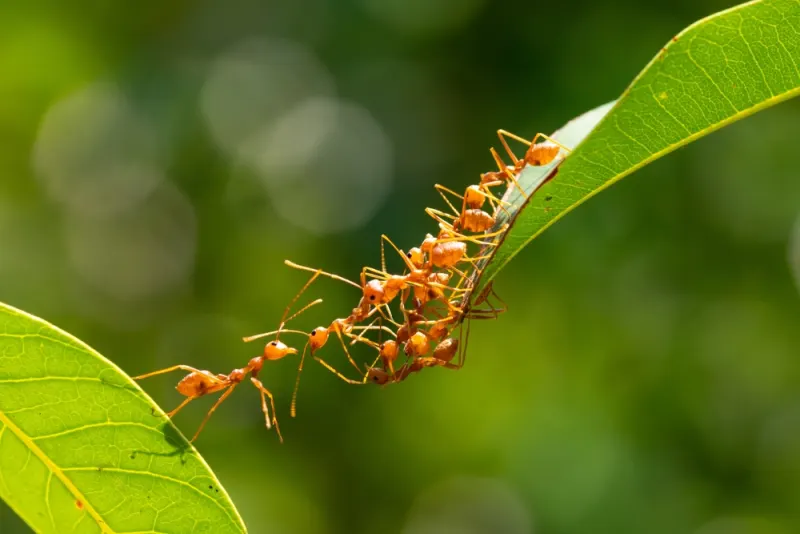
Imagine witnessing a group of ants linking their bodies together to form a bridge, allowing their fellow ants to cross treacherous terrain safely. Well, you don't need to imagine it, because some ant species actually do this! In the rainforests of Central and South America, army ants of the genus Eciton work together to build living bridges made of their own bodies. They lock their legs and jaws together, creating a structure that spans gaps and provides a safe passage for the colony. But wait, there's more. Weaver ants take construction to a whole new level by building nests using their own silk-producing larvae. These ants carefully hold the larvae in place, allowing them to spin silk threads that are used to weave leaves together, creating intricate nests. It's like a macabre version of a construction crew, with the ants using their young as both architects and building materials.
4. Ant Wars
When you think of ants, you might picture them working together harmoniously, but don't be fooled – ants can be warriors too. Some ant species engage in fierce battles with neighboring colonies, fighting over territory and resources. These battles can get brutal, with ants using their sharp jaws to tear apart their opponents. It's like an ant version of "Game of Thrones," complete with tiny swords (well, mandibles). And speaking of warfare, certain ant species have developed chemical weapons to defend themselves. For instance, the well-known bullet ant of Central and South America has a sting that's so painful it's been compared to being shot. This venomous sting serves as a deterrent against predators and a reminder that these seemingly harmless insects are not to be messed with.
5. Corpse Decorators
Ever thought of decorating your living space with the corpses of your enemies? Well, some ant species do just that. Ants in the genus Temnothorax are known for piling up dead ants around their nest entrances. While the exact reason for this behavior is still a mystery, scientists speculate that it might deter predators or serve as a warning to other ants. But there's more. Some ant colonies have designated "graveyards" where they deposit the bodies of their deceased nestmates. These graveyards are often located away from the main nest, reducing the risk of disease spread. It's a creepy yet efficient way for ants to deal with their fallen comrades.