Cities That Have Shaped the World's History
Cities are the epicenters of human civilization, serving as hubs for trade, culture, politics, and innovation. Throughout history, certain cities have played pivotal roles in shaping the course of the...
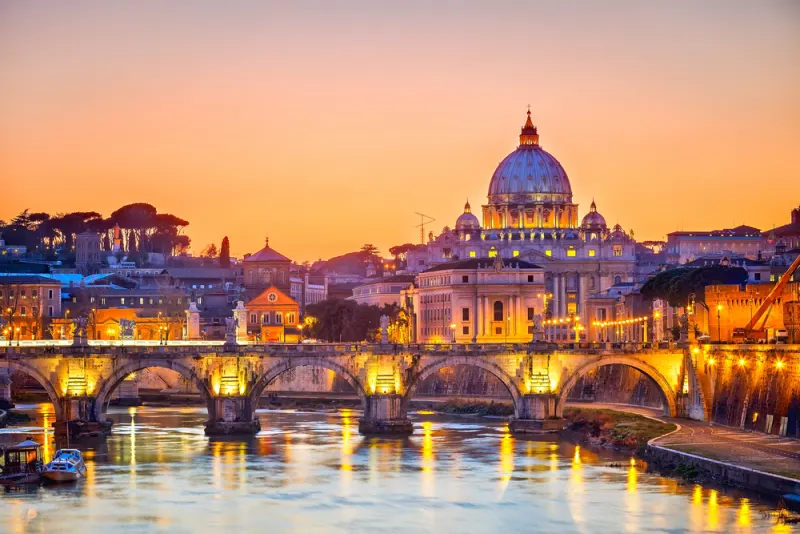
Cities are the epicenters of human civilization, serving as hubs for trade, culture, politics, and innovation. Throughout history, certain cities have played pivotal roles in shaping the course of the world. From ancient capitals to modern metropolises, these cities have witnessed significant historical events and cultural developments that continue to resonate in today's global landscape. That’s why we’re going to explore five cities that have profoundly influenced the world's history, leaving a lasting impact on humanity.
1. Athens, Greece
Known as the cradle of Western civilization, Athens holds a prominent place in world history as the birthplace of democracy, philosophy, and the arts. In ancient times, Athens emerged as the cultural and intellectual center of Greece, nurturing the minds of renowned thinkers like Socrates, Plato, and Aristotle. These philosophers laid the foundation for Western philosophy and ethics, inspiring generations to come. The city-state of Athens introduced the concept of direct democracy, empowering citizens to participate in decision-making through the assembly and the practice of ostracism. The legacy of Athenian democracy remains a cornerstone of modern political systems, influencing the design of governments worldwide. Furthermore, Athens' contributions to architecture and the arts are evident in iconic structures like the Parthenon, a symbol of ancient Greek achievement, and the dramatic arts showcased in theaters like the Odeon of Herodes Atticus.
2. Rome, Italy
The mighty city of Rome stands as a testament to the power and influence of the Roman Empire, which shaped the course of European history and beyond. From its inception as a small settlement on the banks of the Tiber River, Rome grew into a formidable empire that stretched across three continents. As the capital of one of the most significant empires in history, Rome served as the political, economic, and cultural center of the ancient world. The Roman legacy includes monumental engineering feats such as the Colosseum and aqueducts, administrative innovations like the concept of citizenship, and a legal system that continues to underpin many legal codes today. The spread of Latin as the lingua franca of the Roman Empire laid the groundwork for the development of the Romance languages. Moreover, the spread of Christianity from Rome has shaped the religious and cultural fabric of the Western world.
3. Baghdad, Iraq
As the capital of the Abbasid Caliphate during the Islamic Golden Age, Baghdad became the center of intellectual, scientific, and cultural advancements from the 8th to the 13th centuries. Under the rule of the Abbasid caliphs, Baghdad became a haven for scholars, philosophers, and artists from diverse backgrounds, fostering a vibrant atmosphere of innovation and creativity. The House of Wisdom, established in Baghdad by Caliph Harun al-Rashid, was a renowned center of learning, translating and preserving ancient Greek, Indian, and Persian texts. It was here that critical works in various fields such as mathematics, astronomy, medicine, and philosophy were compiled, laying the foundation for modern scholarship and contributing significantly to the European Renaissance. The advancements made in Baghdad had a lasting impact on fields ranging from mathematics and medicine to astronomy and geography. Baghdad's influence on scholarship and the preservation of knowledge during the Islamic Golden Age remains an essential chapter in the history of human civilization.
4. Beijing, China
As one of the world's oldest continuously inhabited cities, Beijing has been a center of political and cultural power for centuries. Serving as the capital of several Chinese dynasties, Beijing holds a rich history that spans over three millennia. The city is home to iconic landmarks such as the Forbidden City, the imperial palace of the Ming and Qing dynasties, and the Great Wall of China, a testament to the incredible engineering achievements of ancient China. In addition to its historical significance, Beijing played a crucial role in shaping the world's history through the establishment of the Ming Dynasty. Under the Ming emperors, China witnessed a period of economic prosperity, exploration, and cultural flourishing. The Ming Dynasty's maritime expeditions under the command of Admiral Zheng He contributed to significant global interactions and trade, connecting China with other parts of Asia, Africa, and even the Middle East. Beijing's historical prominence and its role in shaping China's cultural heritage and global influence solidify its place among the cities that have profoundly impacted the world.
5. London, United Kingdom
The city of London, with its blend of history, commerce, and culture, has played a crucial role in shaping the modern world. As the capital of the British Empire, London stood at the heart of one of the most extensive empires in history, exerting significant influence over global affairs during the 19th and early 20th centuries. The British Empire's legacy includes the spread of the English language, the common law legal system, and the parliamentary system of governance. London's influence on literature, theater, and the arts is evident through the works of Shakespeare, Dickens, and countless other renowned writers who have shaped the literary canon. The Industrial Revolution, which originated in Britain, transformed the global economy and led to radical technological advancements that continue to shape the modern world. As a global financial and cultural hub, London remains an essential player in the contemporary geopolitical landscape, making it one of the most influential cities in the history of humankind.