Birds With a Crazy Dark Side
Some animals, like alligators, racoons and snakes get a bad rap, while others are generally viewed in a positive light. Birds are one of those animals
Some animals, like alligators, racoons and snakes get a bad rap, while others are generally viewed in a positive light. Birds are one of those animals that typically fall on the latter end of the spectrum, but not always. Even though we cherish them for their beautiful songs and colorful feathers, some birds are known for being downright cruel to not only other species, but each other as well. So let’s explore the crazy dark sides of these five birds down below.\r
\r
1. Cassowary\r
\r
 \r
\r
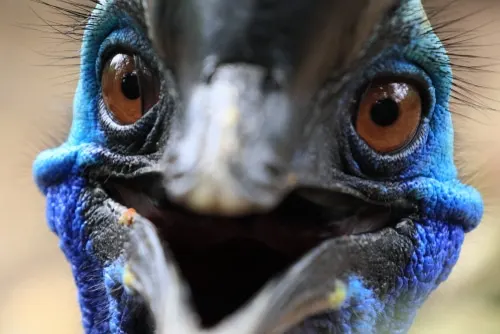
Australia is well known for its diverse and captivating wildlife, many of which are quite dangerous. The cassowary is one such creature but don’t let its majestic appearance fool you, this large bird is known to take out fully grown humans. Standing 6 feet tall, the cassowary is equipped with a 4-inch dagger-like claw on each leg which it uses to attack any potential threat with a single swift kick, causing puncture wounds, lacerations, bone fractures and even death. They’re also known for kicking, pecking and head-butting at their victims.\r
\r
2. Parasitic Jaeger\r
\r
\r
\r
Australia is well known for its diverse and captivating wildlife, many of which are quite dangerous. The cassowary is one such creature but don’t let its majestic appearance fool you, this large bird is known to take out fully grown humans. Standing 6 feet tall, the cassowary is equipped with a 4-inch dagger-like claw on each leg which it uses to attack any potential threat with a single swift kick, causing puncture wounds, lacerations, bone fractures and even death. They’re also known for kicking, pecking and head-butting at their victims.\r
\r
2. Parasitic Jaeger\r
\r
 \r
\r
\r
\r
Any creature with the word “parasitic” in its name is not something you want to mess with. It also doesn’t help that “jaeger” is German for “hunter,” so you can tell where this is going. This bird’s dark side is its hunting style which is basically chasing other birds then snatching their meals mid-air. And nothing is off limits for them—they’ll even feast on other birds and their eggs. Parasitic jaegers are known to carry out their raids in groups, totally overwhelming whatever poor bird they made their target.\r
\r
3. Shrike\r
\r
\r
\r
\r
\r
Any creature with the word “parasitic” in its name is not something you want to mess with. It also doesn’t help that “jaeger” is German for “hunter,” so you can tell where this is going. This bird’s dark side is its hunting style which is basically chasing other birds then snatching their meals mid-air. And nothing is off limits for them—they’ll even feast on other birds and their eggs. Parasitic jaegers are known to carry out their raids in groups, totally overwhelming whatever poor bird they made their target.\r
\r
3. Shrike\r
\r
 \r
\r
Sure, it’s tiny and cute, with a racoon-like plumage on its face and high-pitched squeaky call, but be warned, shrikes are actually hardcore predators. These birds have been observed to impale their prey—various insects, lizards, amphibians, small animals and even other birds—on barbed wire fences, thorny trees and cacti. They do this for a number of reasons, including to attract mates and as a way to store food, especially poisonous animals so that the toxin could fade away. Shrikes learn this skill from a young age, by spiking leaves on tree branches near their nest.\r
\r
4. Pelican\r
\r
\r
\r
Sure, it’s tiny and cute, with a racoon-like plumage on its face and high-pitched squeaky call, but be warned, shrikes are actually hardcore predators. These birds have been observed to impale their prey—various insects, lizards, amphibians, small animals and even other birds—on barbed wire fences, thorny trees and cacti. They do this for a number of reasons, including to attract mates and as a way to store food, especially poisonous animals so that the toxin could fade away. Shrikes learn this skill from a young age, by spiking leaves on tree branches near their nest.\r
\r
4. Pelican\r
\r
 \r
\r
Pelicans are generally gentle and easy-going birds. But when stressed or hungry, another side of them emerges where they begin to swallow everything in sight. Pigeons, ducks, goslings, baby ducks, baby turtles and even chihuahuas have succumbed to their blind rage. And they’re always swallowed completely whole. If hungry, the poor animal will make its way to the stomach. Otherwise, it will be stored in the crop, which is the pelican’s food storage sac, where the prey softens up due to the abundant mucus.\r
\r
5. Shoebill\r
\r
\r
\r
Pelicans are generally gentle and easy-going birds. But when stressed or hungry, another side of them emerges where they begin to swallow everything in sight. Pigeons, ducks, goslings, baby ducks, baby turtles and even chihuahuas have succumbed to their blind rage. And they’re always swallowed completely whole. If hungry, the poor animal will make its way to the stomach. Otherwise, it will be stored in the crop, which is the pelican’s food storage sac, where the prey softens up due to the abundant mucus.\r
\r
5. Shoebill\r
\r
 \r
\r
The shoebill looks like something that totally belongs in the ice age, given its large bill that it uses to decapitate its prey. But like the shrike, the shoebill’s dark side emerges at a very young age, as a fledgling in the nest. These birds have been caught on camera bullying their smaller and weaker siblings while the mother is away, aggressively pecking and pulling at their feathers. And to make matters worse, the mother did nothing about the bully’s behavior, instead fawning over the latter while totally ignoring the victim.
\r
\r
The shoebill looks like something that totally belongs in the ice age, given its large bill that it uses to decapitate its prey. But like the shrike, the shoebill’s dark side emerges at a very young age, as a fledgling in the nest. These birds have been caught on camera bullying their smaller and weaker siblings while the mother is away, aggressively pecking and pulling at their feathers. And to make matters worse, the mother did nothing about the bully’s behavior, instead fawning over the latter while totally ignoring the victim.