Countries With Enough Landmines to Keep You Away
Landmines are deadly remnants of conflicts that continue to pose significant risks to civilian populations long after the fighting has ceased. These hidden explosives can maim or kill unsuspecting ind...
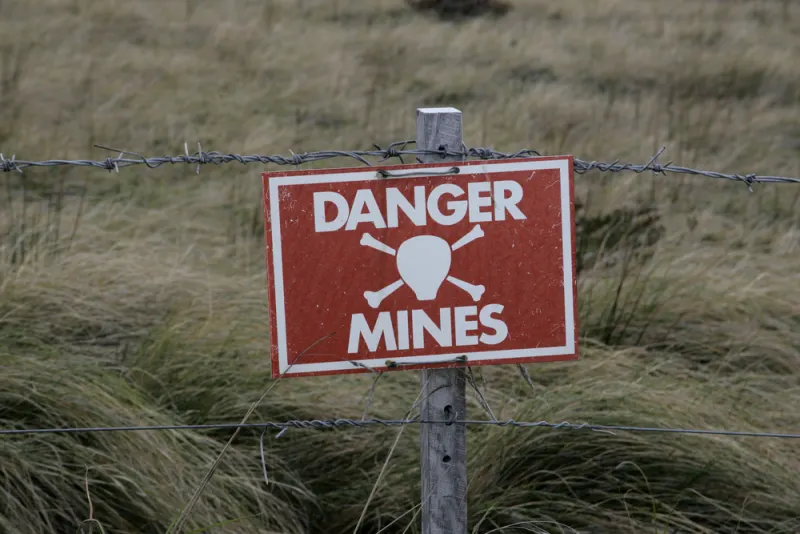
Landmines are deadly remnants of conflicts that continue to pose significant risks to civilian populations long after the fighting has ceased. These hidden explosives can maim or kill unsuspecting individuals, making vast areas inaccessible and dangerous. And today, we’re going to look at five countries around the world that still have significant landmine contamination, making them challenging and potentially hazardous to navigate.
1. Afghanistan
Afghanistan has one of the highest concentrations of landmines in the world, a legacy of decades of conflict and war. Landmines are scattered throughout the country, especially in rural areas and along the borders, posing a constant threat to Afghan civilians and hindering post-war recovery efforts. The dangerous presence of landmines has significantly impacted agriculture, preventing farmers from utilizing vast areas of fertile land. Organizations such as the Mine Action Coordination Centre of Afghanistan (MACCA) work tirelessly to clear landmines and educate communities about the dangers they pose. Despite these efforts, caution is still necessary when traveling in Afghanistan, particularly in rural areas and regions near the border.
2. Angola
Angola, located in southern Africa, has been heavily affected by landmines due to a prolonged civil war that lasted for several decades. The country has vast areas contaminated with mines, making it challenging for communities to rebuild and reclaim their land. Many rural populations face limited access to resources and infrastructure due to the presence of landmines. Various demining organizations, including the HALO Trust and Norwegian People's Aid, are working diligently to clear Angola's landmine-riddled regions. However, significant areas still remain dangerous, particularly in rural provinces. Travelers should exercise extreme caution and seek guidance from local authorities when exploring rural areas in Angola.
3. Cambodia
Cambodia's history is scarred by the brutal reign of the Khmer Rouge and subsequent conflicts, leaving behind a significant landmine problem. Landmines continue to lurk in rural areas, forests, and along the border regions, posing threats to both locals and tourists. The presence of landmines has hindered the country's economic development and agricultural productivity. Demining organizations such as the Cambodian Mine Action and Victim Assistance Authority (CMAA) and the HALO Trust have made remarkable progress in clearing mines. However, it is still crucial for visitors to exercise caution and stick to well-traveled paths, particularly in rural areas or when exploring less-frequented regions of Cambodia.
4. Colombia
Colombia has faced decades of armed conflict involving various guerrilla groups and paramilitary forces. As a result, the country has a significant landmine problem, particularly in rural areas and regions affected by the conflict. Landmines in Colombia are primarily found along borders, drug trafficking routes, and areas with coca cultivation. The Colombian government, along with organizations like the Colombian Campaign Against Landmines (CCCM), is working diligently to clear mines and provide assistance to affected communities. However, it is important for travelers to remain vigilant and seek local advice when venturing into rural areas, particularly in regions affected by the conflict.
5. Bosnia and Herzegovina
Bosnia and Herzegovina, in southeastern Europe, still grapples with the legacy of the Balkan Wars in the 1990s. Landmines are scattered across the country, particularly in rural areas, forests, and along former front lines. These hidden dangers pose risks to local populations, hinder infrastructure development, and impede land use. Demining organizations, such as the Norwegian People's Aid and the Bosnian Mine Action Center (BHMAC), are actively working to clear landmines and make the country safer. Nonetheless, caution should be exercised when exploring rural areas, especially in regions that witnessed heavy conflict during the war.